Fortnight ending Saturday 6th June 2026. Read time: about 7 minutes.
In the Staffroom
This fortnight has a pleasingly mixed flavour: NASA’s moon-base ambitions have become both more concrete and more combustible, condensed-matter physicists have found a deeply odd angular-momentum effect in a crystal, CERN has added another heavy-quark curiosity to the family album, and Neptune’s moon system has become even messier than expected. There is also a staffing jolt for physics teacher training, a Hawking biography teaser, Feynman doing holiday restaurants, and one excellent astronomy bookmark for future-you.
Physics in the News
Moon-base plans have become very real, and then very expensive-looking.
NASA’s lunar programme has shifted another step away from flags-and-footprints symbolism and towards actual infrastructure. The BBC’s moon-base piece captured the broader idea, while the Guardian’s report covered NASA selecting Blue Origin for the first of three uncrewed lunar cargo missions tied to future base-building. Then, because spaceflight dislikes tidy narratives, New Glenn exploded during a hot-fire test on 28 May, badly complicating the timetable for those lunar ambitions.
For the classroom, this is a useful real-world bridge from gravitational fields and trajectories to systems engineering, launch risk, and the awkward truth that “technically possible” is not the same thing as “ready next Tuesday.”
Source: The Guardian, AP News, BBC News
Angular momentum has managed to stay conserved while still looking like it is being cheeky.
A team led by researchers at HZDR and the Fritz Haber Institute used intense terahertz laser pulses to drive atomic motion in a bismuth selenide crystal and directly observed angular momentum being transferred between lattice vibrations. The odd bit is that the apparent direction of rotation flips during the process because of the crystal’s rotational symmetry.

If you teach strong A level students, this is a lovely enrichment story because it keeps the conservation law intact while showing that symmetry can make the outcome look deeply counter-intuitive. It also gives you a proper modern example for why angular momentum is not just spinning wheels and ice skaters.
Source: SciTechDaily
CERN has spotted the excited Bc*+ meson.
The ATLAS Collaboration has observed the Bc*+, an excited version of the Bc+ meson made of a charm quark and a bottom antiquark. What makes the story especially teachable is the detection problem: the decay photon is so low-energy that the usual approach is awkward, so the team instead reconstructed cases where the photon converted into an electron-positron pair in the detector. The measured mass difference was 64.5 ± 1.4 MeV.
This is good sixth-form enrichment because it is particle physics refusing to be clean and diagrammatic for once: quarks, mesons, decay products, detector design, and the strong force all in one place.

An artist’s impression of the Bc*+ meson. Image credit: Daniel Dominguez / CERN.
Source: Sci.News
Neptune’s moon Nereid may be a survivor rather than a late arrival.
New analysis of JWST data suggests Nereid may be the only sizeable moon left over from Neptune’s original system, rather than a captured Kuiper Belt object. The idea is that Triton really was captured and then gravitationally wrecked the old moon system, leaving Nereid as the one substantial relic.
That is a very nice story for GCSE astronomy or space-physics-adjacent teaching, and for A-level astrophysics clubs, because it turns “moon” from a static label into a dynamical history: capture, disruption, orbital oddities, composition, and model-testing.

Nereid (inset) may be the only moon of Neptune (background) that was around when the planet first formed, a new JWST study hints. (This composite image is not to scale).(Image credit: NASA/JPL)
Source: Live Science
The bursary change matters even if you are nowhere near ITT.
Schools Week reports that ministers scrapped physics and modern-languages bursaries for overseas trainees mid-cycle, with the Department for Education saying the offer was being “paused” because recruitment had improved. The awkward bit is that physics still missed target last year, despite entrant numbers rising sharply, and Schools Week cites figures showing 37% of new physics trainees were from the UK, 5% from the EEA and 58% from other nationalities in 2025–26. If you are wondering why physics staffing still feels brittle even when recruitment headlines look better, this is part of the answer.
Source: Schools Week
Worth Sharing
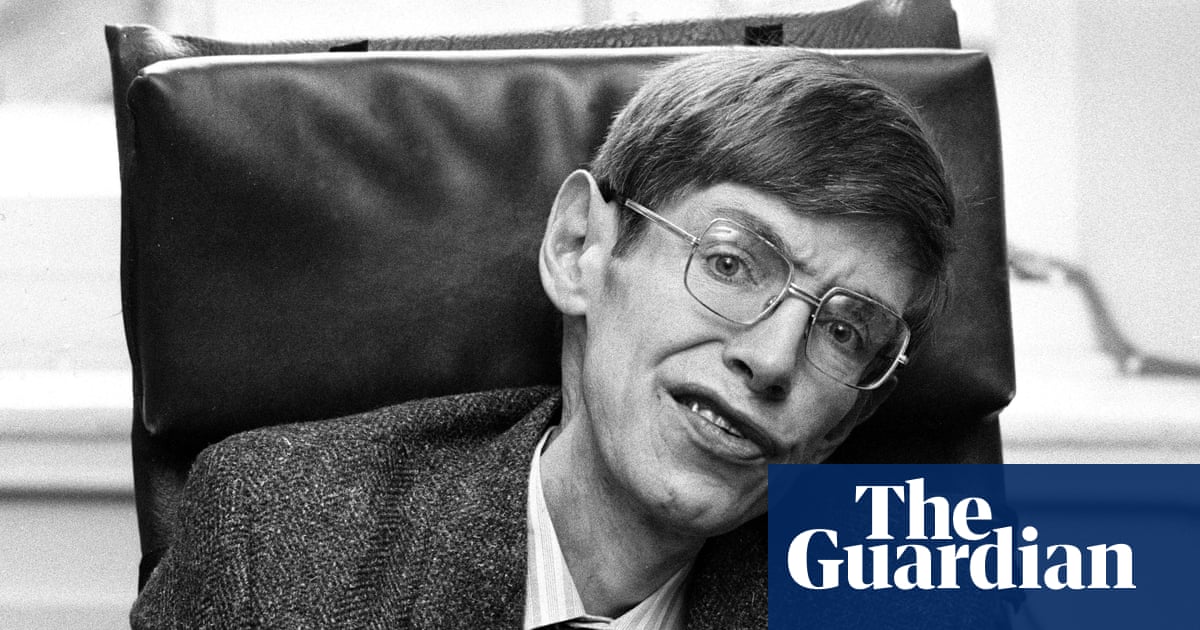
The Guardian has a striking piece drawn from newly uncovered family diaries used for Graham Farmelo’s forthcoming authorised biography of Hawking. The most useful thing about it is not the headline line from his father; it is the reminder that future giants often look unconvincing in real time, even to the people sitting in the same house. That is not a teaching strategy, sadly, but it is a useful corrective to tidy genius narratives.
Source: The Guardian
Feynman’s restaurant problem is really about when to stop searching.
The Guardian’s write-up of a new PNAS paper looks at Richard Feynman’s notes on a beautifully ordinary optimisation problem: when you are on holiday, how long should you keep trying new restaurants before settling on the best one you have found? The answer is a threshold rule: explore early, become fussier as time runs out, and eventually stop pretending that one more option will definitely solve your life.
It is a good staffroom read because it turns a familiar human habit into probability, decision theory and optimisation. Also, it is oddly reassuring to know that even Feynman could make choosing dinner feel like a derivation!

Source: The Guardian
Physics Video of the Fortnight
This fortnight’s slot goes to a practical bookmark rather than a single dramatic explainer: the GCSE astronomy playlist by Dr David Boyce. If you teach the separate astronomy course, run astronomy enrichment, or simply like having a sane sequence of videos to hand before reinventing one at 10:47pm, it is worth saving now and thanking yourself later.
Source: YouTube
Guest Column
Supermassive Black Holes by Phil Dennis
I often get students and members of the public asking about the black holes in the centre of galaxies. We barely touch black holes even at A-level even though they inspire such curiosity - so here’s a (very) potted summary of what we know and what we don’t.
A supermassive black hole (SMBH) is one with a mass in the millions of solar masses and higher. Since the 1990s we’ve known that they’re responsible for the range of odd observations of the centres of galaxies (for example bright radio and X-ray emissions) as well as in our own galaxy, very fast orbits of stars around a single dark point. In 2008, this dark object, Sagittarius A*, was measured at about 4 million solar masses. We are now confident that a SMBH is found at the centre of almost all large galaxies.

A great way to inspire students is the host of open problems that SMBH present. First is “how did they get so big?” There are limits on the rate at which a black hole can grow by absorbing matter around it, and it quickly becomes clear the universe simply isn’t old enough for SMBH in the million solar mass range to have grown from supernova remnant black holes by accretion, or even by mergers. Answers may lie in JWST studies of very early galaxies. Secondly, “are SMBH a key part of galaxy formation?”. Studies linking the mass of SMBH to the velocity dispersion and mass of their host galaxies suggests the answer is yes - but exactly how is not yet understood. As always, the more we learn, the more puzzles we encounter. It’s an exciting time to learn astronomy.
In your class, drawing attention to the existence of SMBH would enrich the curriculum where you teach ordinary stellar mass black holes as part of stellar life cycles. You could point students to Dr Becky (YouTube), who makes excellent content on the subject.
Further reading:
Nandal, D. First indirect evidence for primordial monsters. CERN Courier Jan/Feb 2026, pg. 11 (2026).
Alexander, D. M. et al. What drives the growth of black holes: A decade of progress. New Astronomy Reviews 101, 101733 (2025).
Phil Dennis is a UK-based astronomer, educator, and nerd raconteur. He teaches physics, mathematics, and computer science at Whickham School in Gateshead. He is also Education Manager at Grizedale Observatory in the Lake District. He can be contacted via [email protected].
Physics Misconception of the Fortnight
Misconception: Metals feel colder because they are colder than other materials in the room.
Better framing: Metals often feel colder because they are better thermal conductors. They transfer energy away from your skin more quickly than materials such as wood, plastic or fabric at the same temperature.
Why students get stuck: Touch feels like a direct thermometer, but it is really detecting the rate of energy transfer from the skin. Everyday experience quietly teaches “cold-feeling means colder”, which is not quite the same thing and is exactly the sort of betrayal physics enjoys.
Here’s How It’s Derived


Final Quote
“I do not mind if you think slowly, but I do object when you publish more quickly than you think.”
— attributed to Wolfgang Pauli
Source: The Times of India
The Physics Staffroom is a human–AI collaboration. AI helps gather and format material, but each issue’s selection, verification, editing, design, and regular features are all done by a humble, human physics teacher! 🤓
Clicky stuff:
Free Weekly AI Sessions for Experienced Software Engineers.

Every Wednesday at 5 PM CT, Gauntlet AI professors teach a live, hands-on AI engineering session — completely free. If you're nontechnical, this isn't for you. New topic every week, built for engineers who want to build, not just watch. See upcoming sessions.
The Odds are Finally in Your Favor

Novig is giving you better odds and lower fees by trading directly with other users. Skip the sportsbook markup. Sign up now and get $50 in Novig Coins for your first deposit of $5 using America's Sports Exchange